Boeing, the aircraft manufacturing giant, announced yesterday about its intention to invest $20 million to purchase stacks in Richard Branson’s Virgin Galactic space tourism company. The deal is expected to be closed by the fourth quarter of this year.
Virgin Galactic has also enlightened about its planning to go public till the end of this year after its hook-up with Social Capital Hedosophia Holdings, and to be the first publicly traded company in space tourism sector.
The Senior Managing Director of Boeing HorizonX Ventures, Brian Schettler states, “Boeing’s strategic investment facilitates our effort to drive the commercialization of space and broaden consumer access to safe, efficient, and environmentally responsible new forms of transportation.”
He added, “It’s really about catalyzing the partnership first and foremost between two companies that bring incredible complementary capabilities to commercial space and to the key technologies needed — and frankly beyond just technologies. The whole end-to-end solutions to bring high speed mobility to the masses”
Previously, Boeing’s Horizon X has also invested in few technology-focused companies including an on-demand drone delivery firm named Matternet, a satellite communications company named Myriota, and a hyper-sonic engine manufacturing company named Reaction Engines.
Currently, Boeing is working on its own space projects too in which Starliner space taxi is a big name. According to Boeing, this space taxi will ferry astronauts to the International Space Station.
Meanwhile, VG’s competitor, Blue Origin is also planning to send its New Shephard rockets in space as a passenger flight, and SpaceX is planning to take tourists around the moon.
George Thomas Whitesides, the CEO of Virgin Galactic states, “We are excited to partner with Boeing to build something that can truly change how people move around the planet.” He also added, “The broader capabilities of Boeing are unmatched in mobility and experience in human spaceflight, so we’re over the moon about this partnership.”
Empowering
Businesses with Stellar Leadership Skills
With
many great minds, come many perceptions!
A
group of conscious minds might only lead to chaos if not filled with
a constructive vision or a precise direction. Only those with an
ability to comprehend the distinctive perceptions and convert it into
an adequate approach can lead the cluster forward.
We
have had witnessed a series of impeccable leaders, both women and
men, who shifted the trajectory of the business to heights. Be it an
influential talk-show host, Oprah Winfrey, or the CEO of giant
automobile industry General Motors, Mary Barra, women had
exceptionally defined the word success
in their respective fields. Such women are disrupting the customary
ways of businesses by contributing their tireless efforts altogether
for the organization. Yet of bestowing such terrific contribution,
women are still getting prejudiced over their ability to govern a
business more efficiently. She just needs a chance to prove. An
American political figure, diplomat and activist, Eleanor Roosevelt
quotes, “A
woman is like a tea bag – you never know how strong she is until
she gets in hot water”.
In
the male dominated socio-political environment, women were mostly
underestimated with their abilities to bring out a revolutionary
change in societies. But eventually, this sabotaging factor soon
lifted up allowing women to reap more benefits from the available
opportunities in businesses. That resulted into the emergence of
great women leaders who impressed the globe with their triumph.
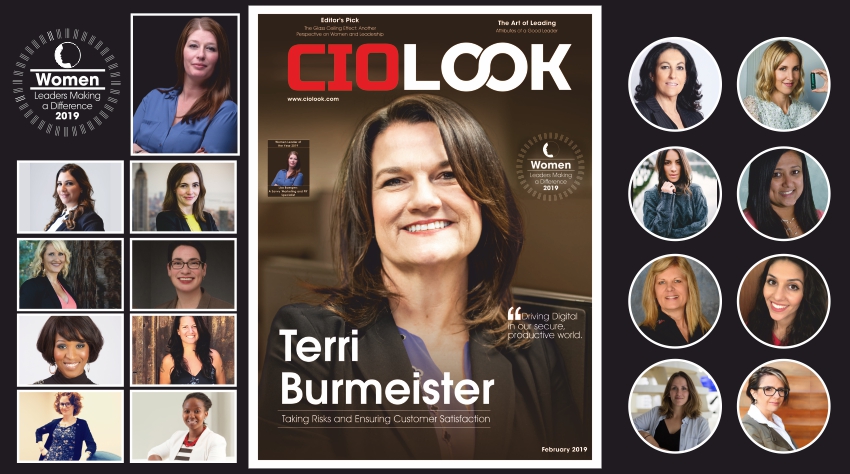
CIOLook appreciates the contribution put forth by such avid women leaders and brings out you the very first, women’s day special edition, “Women Leaders Making a Difference 2019”. These women are creating a dent in the universe by delivering disruption in the business world.
A
business enthusiast, Terri
Bermeister,
features on the cover of this issue. Led by an in-depth insight over
businesses structure, Terri has inherently reformed and elevated her
organization to a leadership position in the field of cloud & IT
services. Currently leading as a President
of Catapult,
she has successfully delivered a positive satisfaction from the
customers by meeting up to the expectations of customers. With an
ideology, as quoted by Terri, “With
a commitment to customers is what makes us unique”,
she states that the company delivers best customer-centric solutions
to evolve help its clientele to flourish in the cut throat
competition.
Let’s
unveil such alike, inspiring interviews and stories of many such
significant women business leaders in this special edition and spread
a word about their contribution in making this world a better place.
Also, flip through the CXO standpoints presented by some of the
leading industry experts to taste the glimpse of industrial
revolutions. .
Since the end of the 90’s internet slowly started to become mainstream, and with that data became the new oil. Adding to that, digital advertising and marketing has helped to grow data exceptionally in volume and importance. For advertisers knowledge about customers’ specific is very much important in order to unlock the marketing potential. So, entered Data Management Platform aka DMP a new breed of technology that collects, manages and activates data.
As you might have already guessed from the name itself DMP is a platform that basically manages data. If said in simple terms, DMP is a data warehouse which basically houses and sorts information and eventually provides the useful information to marketers, and other businesses.
According to a latest study, most of the advertisers are planning to increase the average number of integrated data sources to 6.2 in 2019 from 5.4 in 2018. Also, around 47 percent of the advertisers who hail from North America are planning to increase the use of third party data in 2019, which is the biggest amongst all the regions. According to most of the advertisers DMP is also helping them to measure the effectiveness of digital advertising.
As brands nowadays are reliant on multiple data sources to target audiences, they are increasingly turning towards various DMPs to import data and by the end of the fiscal year more than 91 percent advertisers are planning to have or adopt a data management platform. Also, thanks to the brilliant integration of data sources by more than 27 percent of advertisers have helped to calculate the lifetime value of a customer, which helps them to be successful in the long run.
Now you might ask, “How the DMP is influencing various businesses around the globe?”
Streamlining Data: Gone are those days, when data used to be scattered across places like emails, social media, customer loyalty channels and e-commerce platforms. Thanks to DMP one can bring all these scattered data in a single place, thus providing a better understanding of the audiences, results and the marketing environment.
Curbing Marketing Spends: Thanks to DMP, now users have the access to multiple data vendors, which eventually help marketers decide the marketing budget and the marketing vehicles.
Identifying Potential Clients: Most of the time DMP provides multiple new ways to have a look at segmenting the audience, which the users might not have seen or knew previously.
Making Life Easier for Marketers: There are times when marketers add multiple campaigns and devices to their digital marketing strategy, which eventually makes life hard. Nevertheless, DMP delivers the data in a way that one can minimize mistakes and keeps duplication of information at bay, which eventually makes life easier for marketers.
Thanks to the ever diminishing lines between B2C and B2B technologies, Data Management Platforms are becoming more and more popular in the B2B world. At first, marketing automation witnessed and realized that B2B marketers can also personalize communications as per their needs.
However, the progress of DMP is relatively slow in the B2B market, because unlike the B2C there are multiple decision makers who need to be touched.
At first DMP’s main agenda was to execute an ad campaign, segment audience and personalize advertisement. DMPs often help marketers to connect audience and performance data across all sources. The best part of Data Management Platform is, it helps to build marketers build audience segments where it includes data related to location, device info, past browsing history, past purchase history, demographics, household income etc. Then DMP can analyze how these individual segments are performing. Thanks to all those analysis, marketers can optimize campaigns in order to reach the target audience or to those who perform best. The best part is, if any B2B marketer doesn’t want to spend a lot in advertising, DMP can still be used in order to optimize almost all the campaigns that one prefers.
So, at the end of the day one can easily say DMPs are changing the lives of the marketers for good. Nonetheless one should always keep in mind DMPs are not entirely self-sufficient. DMPs are not only the core of customer centric digital marketing strategies, it is also a part of a much wider programmatic ecosystem.
Webiny, a London-based startup has announced its seed round of worth $348 K to build an open-source serverless CMS for developers. The total funding round was led by Episode 1, a UK investment company.
According to the Founder of Webiny, Sven AI Hamad, Webiny is been built for a serverless environment as a full-featured content management system. He states, “We built Webiny from the ground up, and architected it so it works only inside serverless functions.”
Sven added, “We believe that centralized is going to be the future of web development, and to help out the community and advance that thought, we built the first serverless content management system — and open-sourced it.”
According to Webiny, the term ‘serverless’ doesn’t mean that no server is required for the functioning, instead, developers would be able to work without taking stress about infrastructure resources. The cloud providers could resolve developers’ issues as per their requirements along with scaling up and down automatically.
As per various sources, Sven states that websites can use this service perfectly. He explains the built system by taking an example of the Black Friday e-commerce scenario. He says that as e-commerce websites get crowded by the shoppers to take benefits of big sales on Black Friday and get overloaded, the cloud services add server capacity automatically as per requirement instead of supplying extra servers manually. Even it discontinued automatically after the fulfillment of its necessity.
He further notifies that the system also decreases the need of big DevOps team for operation management, and allows developers to maintain great websites freely without bothering about resources to run the content.
Sven said in a statement, “At the end of the day, developers can build new things much, much faster, like building the website or adding new features because he or she doesn’t need to waste time on spinning up servers just to test things or worrying about networking, load balances and all those complexities.”
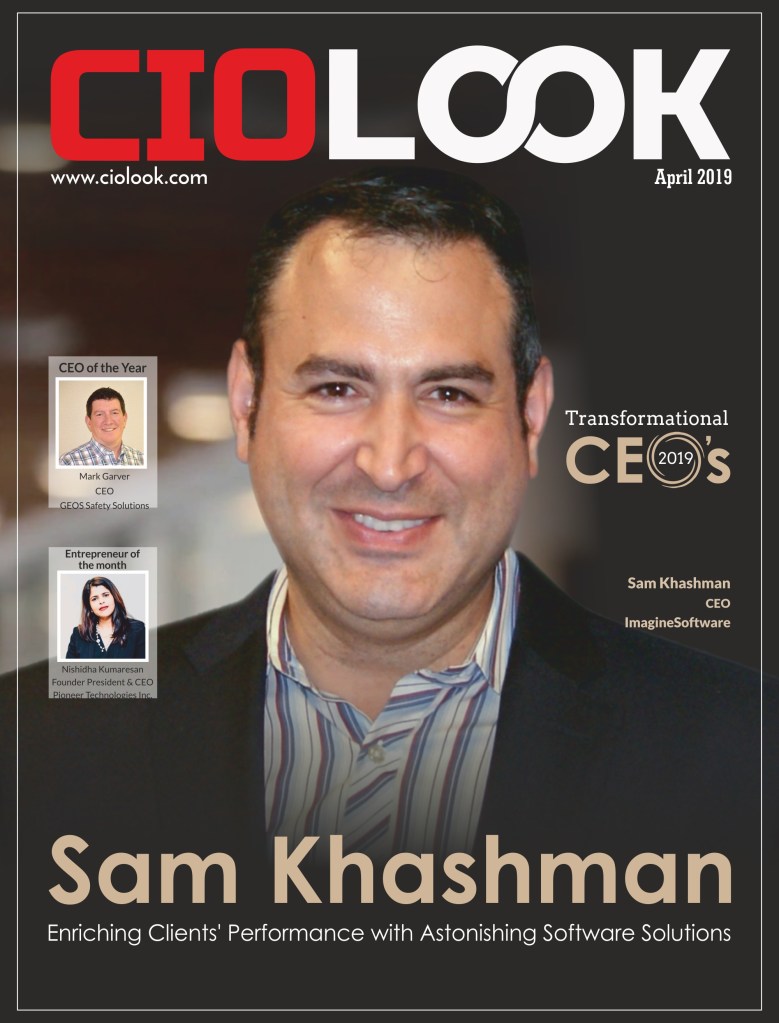
The characteristics of being a successful leader exist in those individuals who admire and drive innovations to meet client requirements. A perfect balance between these two aspects with the integration of market intelligence could enable any leader to take an organization to its utmost heights. This art of leadership is professionally portrayed by CEO of ImagineSoftware, Sam Khashman. His ability to predict market changes in an uncertain healthcare industry have helped him deliver more compatible products to ImagineSoftware’s clients. This distinctive approach towards creating client-friendly products has made his organization more adaptive to technological disruption and market demands.
CIO Look has specifically crafted its ‘Transformational CEO’s’ edition to appreciate such leaders and their contributions in respective industries.
Below are the highlights of an interview conducted between Sam and CIO Look:
Kindly take us through your journey on becoming a leader. The word ‘becoming’, itself is a growth process.
Despite the phrase “born leader”, no one is born knowing how to lead. This is true for me as well. I knew I had ideas that I wanted to bring to life, and I was able to articulate those ideas with passion and energy, hoping to inspire those around me. It took me some time to realize my strengths and weaknesses for leading others. When you first start building a company, there are lot of hats to wear. Everyone is working towards creating a sustainable, viable product line and managing that becomes front of mind. Over time, with growth and success, priorities crystalize, and this is when leadership becomes paramount. I had to take the next step, lead by example and truly rely on my team, their abilities, and their willingness to grow. Complete transparency and empowering our team to collaborate and trust each other became a cornerstone of our operations. Instead of simply handing out work we had to rally around Vision, Mission, and Values with clear direction and accountability. Changing the mindset from a manager to leader can pose interesting challenges like self-awareness of strengths, weaknesses and surrounding myself and my team with like-minded people who would take the company in the right direction became the key to growth and sustainable success. In doing so, I am proud to say that we practice servant leadership and truly feel I have been able to assist others around me to develop the type of leadership that encourages a team mentality, a company culture second to none, and an undying focus on our clients. Imagine is a family, and we’ve all formed a cohesive sounding board to drive innovation within our organization, offering suggestions and opinions for improving projects and processes while learning and respecting each other.
How do you diversify your organization’s offerings to appeal to the target audience?
Imagine started out in a completely different market. Our product wasn’t originally designed for healthcare, but that’s the direction we took not long after the system was first developed. We had to revamp the software to accommodate the needs of our initial clients who got us started in radiology. Ever since the beginning, we’ve aimed to meeting, and exceeding, the needs of our clients and that’s really where our product offerings have taken us. Whenever we can develop a new product or utilize partnerships to bring a solution to the table that solves a problem for our clients, we will do so. Our clients help drive our success, and we take their needs, suggestions, and requests to heart. They are the foundation behind what we decide to include in the Imagine Suite. As a result, we’ve been able to appeal to the market by truly creating systems that are focused on making the revenue cycle management landscape easier to navigate and more profitable for all those involved, while enhancing our client’s reputation by providing an enhanced patient experience.
What are the crucial traits which every CEO must possess?
Every CEO should make certain that their words, their beliefs, and their actions match. Of course, CEOs should be decisive while employing critical thinking skills as we build our opinion. As the top executive, we should always remember that we must both care for our team members as much as we should care about other people. Practicing servant leadership and building strong relationships with clients, partners, and coworkers, while remaining grounded are crucial to the success of an organization. Communication skill is the key, as is continuous learning. To drive the growth of the company and to provide vision that allows the team to align thinking innovatively, and coaching your employees to do the same, is always an essential part of leading a team. Furthermore, I believe that it’s the job of any CEO to dream big as there is no magic in thinking small.
What are your intakes on roles of a CEO with regards to transformational leadership?
In business today, everything moves quickly. Organizations that stay stagnant don’t last. That is simply a fact of the world we live in. As a company, we cannot settle for small, intermittent improvements. We must take huge leaps and bounds to stay the leader in our space, and to allow our clients to remain. The future must inform the present. Constantly challenging the status quo, both internally and externally, and anticipating and evaluating various market trends all play an important role to fostering a culture of transformation. To do that, we encourage a constant learning and growth mindset in our team members, to ensure are communicating how and why change is a necessary, permanent component of our success must be part of the journey. Transformation takes place at every level of the organization, and so we ensure that transitions are meaningful, and that we measure successes and improvements. Only when our team members understand why positive change will propel our organization can our service levels and product offerings improve, allowing for our clients to reap the benefit and help drive their success. Because the position of the CEO is frequently most visible, it is important to lead by example, align our team, and inspire change when necessary. Most importantly, transformation must be inclusive as everyone plays a role in transforming the way we do business.
As per your opinion, what roadblocks or challenges are faced by CEOs in a corporate business?
And what is your advice to overcome them? There are several challenges, I believe, CEOs face when running a business. Both talent acquisition and talent retention are crucial, and naturally, every company competes for the best of the best resources. Beyond skills, it can be difficult to find the right talent to align with the company culture, values, and brand. We would like to think that we can hire the perfect fit, but I think it’s important to have realistic expectations from our team, and sometimes onboarding can be challenging in that respect. Further ensuring the company leadership is able to grow at the same rate as our company can pose an interesting challenge, in every aspect. As CEOs, we are driven to succeed for our teams, our stake holders, our clients and partners. Finding the right balance between driving the success of the organization and providing a relaxed environment to prevent burn out definitely makes the role of CEOs interesting. Being we want to stay constantly connected to our clients, partners, and employees at any given minute, it can be a struggle to find the time to unwind and “unplug” to keep yourself (and your organization) healthy and productive.
How do you upgrade yourself with ever-evolving technological trends to boost your personal growth?
The key to a growth-oriented mindset is continuous learning. Imagines’ business is technology. If we aren’t on the cutting-edge, we’re last in line. I’m always intrigued by technological advancements, both current, and early stage. Technology touches every part our daily lives and much like what we develop, it is typically designed to improve a process or enhance quality characteristics. I make it a priority to stay at the forefront of new technology to keep moving forward. With the rise of artificial intelligence (and not just in healthcare but many other industries), people are becoming more reliant on the role technology will play. While it is important, and some would say a valid concern, I don’t feel that technology will ever truly be able to replace the human component but instead, it will allow us to grow.
A startup is a process to establish a new business by an individual or a group. The concept of the startup is to supply or provide something which is in demand. There are 11 thousand new startups every hour, which shows the vastness of this concept. However, only 10% of startups get the needed success and meet market demands. It is a long process to change an idea into reality and then establish it.
CIOLook : Today everyone wants a fast and comfortable life, to provide such kind of life there should be more efficient services and products. Omnichannel shopping is the best example of, how can ideas revolutionize the service and marketing industry. Startups are adding quality in life, and improving living standards.
When a startup is getting successful and expands its limit, it directly effects on the people and the geographical area. Companies like Microsoft, Alibaba, and Google have transformed their cities. There are many benefits a startup can offer, some of them are-
The ratio of failed startups is 90%. It is huge and shows the uncertainty in the market. It is evident that every idea is not approachable no matter how innovative you think it is. First, do not mix Entrepreneurship and startups, both are entirely different fundamentally.
Entrepreneurship starts with an innovative idea, but it is not always intended to get big or need high investments to get established. Startups need to come up with highly approachable ideas and big finance to get a head start. These are the reasons behind the failure of a startup-
Failed to scale – An idea can change the world, but in the business world every idea and innovation has its own limitation. Many founders make mistakes on the scaling of the team, required finance, expansion, capital, and area this shows the lack of vision and overconfidence in decision making.
Uncertainty in Finance – Capital investment is a basic and most valuable thing in a startup. Even the most successful startup faces capital problems due to lack of product’s expansion and low demand in the market.
No Need of Product- Many startups face hard to keep up with the market because of low demand in the product. It happened due to low interest in the product, not satisfying public demand, low productivity and quality issues.
Leading a Wrong Team- A startup needs big finance as well as a team of experts which would equally visionary and dedicated to the product as the founders and co-founders. It is very important to realize that your team is your first audience not connecting with them shows a lack of leadership. A founder should understand his needs and expertise related to his business.
Marketing Issues – Low marketing strategy effects sales growth and disconnect the product to market.
A Startup’s growth depends on its design and planning. Without proper research and evaluation, it could be just losing money on nothing. An idea is just a beginning; proper planning and calculated risk are what makes a startup successful. There are 42% of startups get failed due to lack of consumer interest, 29% due to funding, 23% by team and staff’s problem, and 19% by competition. It is very critical to analyze that is market will certain about any particular product or service. Evan established product face uncertainty eventually. However, digital media, automation, and modern technologies make easy to connect with the target audience and establish a startup according to required preference.
This is the first post on my new blog. I’m just getting this new blog going, so stay tuned for more. Subscribe below to get notified when I post new updates.
This is an example post, originally published as part of Blogging University. Enroll in one of our ten programs, and start your blog right.
You’re going to publish a post today. Don’t worry about how your blog looks. Don’t worry if you haven’t given it a name yet, or you’re feeling overwhelmed. Just click the “New Post” button, and tell us why you’re here.
Why do this?
Because it gives new readers context. What are you about? Why should they read your blog?
Because it will help you focus you own ideas about your blog and what you’d like to do with it.
The post can be short or long, a personal intro to your life or a bloggy mission statement, a manifesto for the future or a simple outline of your the types of things you hope to publish.
To help you get started, here are a few questions:
Why are you blogging publicly, rather than keeping a personal journal?
What topics do you think you’ll write about?
Who would you love to connect with via your blog?
If you blog successfully throughout the next year, what would you hope to have accomplished?
You’re not locked into any of this; one of the wonderful things about blogs is how they constantly evolve as we learn, grow, and interact with one another — but it’s good to know where and why you started, and articulating your goals may just give you a few other post ideas.
Can’t think how to get started? Just write the first thing that pops into your head. Anne Lamott, author of a book on writing we love, says that you need to give yourself permission to write a “crappy first draft”. Anne makes a great point — just start writing, and worry about editing it later.
When you’re ready to publish, give your post three to five tags that describe your blog’s focus — writing, photography, fiction, parenting, food, cars, movies, sports, whatever. These tags will help others who care about your topics find you in the Reader. Make sure one of the tags is “zerotohero,” so other new bloggers can find you, too.




 Business Magazines